
One Game for Sindhu, One Match for An Se Young: Where the Paris Final Was Actually Decided
**मुख्य उत्तर**: फ्रेंच ओपन 2026 महिला एकल फाइनल में अन से यंग ने पीवी सिंधु को 16-21, 21-11, 21-12 से 61 मिनट में हराया। सिंधु ने पहला गेम जीता, पर पिछले दो गेमों में अंक 23-42 रहे — यह सामरिक हार नहीं, लंबी रैली में क्षमता और निरंतरता का अंतर था। **मुख्य तथ्य**: - स्कोर 16-21, 21-11, 21-12; कुल 102 अंक, 61 मिनट, प्रति अंक औसत 36 सेकंड। - सिंधु और अन से यंग के 11 मुकाबलों में सिंधु सिर्फ दो बार एक गेम ले पाई हैं। - सुपर 750 उपविजेता लगभग 9,350 BWF रैंकिंग अंक (मानक तालिका, सत्यापन लंबित)। - सिंधु 31 वर्ष; 2026 में जापान ओपन खिताब और फ्रेंच ओपन उपविजेता, दोनों सुपर 750। - अन से यंग विश्व नंबर एक; रिपोर्ट के अनुसार यह उनका चौथा फ्रेंच ओपन खिताब (सत्यापन लंबित)। **स्रोत**: मूल मैच रिपोर्ट एवं Stage-2 विश्लेषण दस्तावेज; प्रकाशन तिथि: 26 अक्टूबर 2026। 2026 सीजन और "चौथा खिताब" के आंकड़े स्वतंत्र रूप से सत्यापित नहीं। **संबंधित प्रश्न-उत्तर**: प्रश्न: क्या सिंधु की 2026 वापसी असली है? उत्तर: हां — एक सीजन में दो सुपर 750 पोडियम असली हैं, लेकिन यह टॉप-8 स्तर है, टॉप-1 स्तर नहीं। प्रश्न: अन से यंग सिंधु के खिलाफ क्यों हावी रहती हैं? उत्तर: क्योंकि उनका कवरेज-और-डिफेंस खेल रैली लंबी कर हमलावर की फिनिशिंग क्वालिटी घटा देता है। प्रश्न: अगली बार कौन सा संकेत देखना चाहिए? उत्तर: तीसरे गेम का स्कोर — 12-21 से 16-19 की ओर बढ़ना सुधार का सबसे साफ पैमाना होगा।
In Pune, past eleven at night, three screens carried the same match — the French Open women's singles final from Arena Grand Paris. Game one ended 21-16 and I wrote exactly one line in the notebook: "From 11-all, Sindhu took it 10-5." Then came game two, 11-21. Game three, 12-21. The match ran 61 minutes and produced 102 points, an average of 36 seconds per point. That is slightly on the long side of normal, and it is long because the rallies were long. On the scoreboard it reads like "she took a game off her." In the notebook it reads differently. The notebook opens before the scoreboard does.
This was a BWF World Tour Super 750 final — one rung below the Super 1000s, but the tier where a season's true shape gets built. For Sindhu it was her second Super 750 podium of 2026; she won the Japan Open title in July. Two Super 750 podiums in a single season at 31, and neither of them farmed at Super 100 or 300 level. Across the net stood An Se Young, world No. 1 and top seed. The original report states this was her fourth title at this event.
A caveat belongs here. The report on which this analysis rests names no source against any of its factual claims, and the 2026 season as well as the "fourth title" figure remain unverified on my side. I am treating them as data pending verification, not as fact. What is verified is the shape of the score and Sindhu's own diagnosis — that long rallies made converting opportunities difficult.
The points arithmetic matters too. Under the standard BWF points table, a Super 750 runner-up finish is worth roughly 9,350 world ranking points and a title roughly 11,000 (this figure too is pending verification). The Japan Open title plus the Paris final add up to a seasonal base in the region of 20,000 points. That base decides seeding, and at 31 seeding is not merely a number — it is the structure that determines whether you meet a player like An Se Young before the quarter-finals. This stretch of the calendar also sits inside the World Tour Finals qualification window and inside the annual fatigue period; the result is a question of load management as much as of trophies.
The final's architecture was an old template: attack versus retrieval. Sindhu's game rests on height and a high contact point — the sooner a rally dies, the better for her. An Se Young's game is the inverse: coverage and defence. The original report described her strength in exactly those two words, "exceptional court coverage and defence," and that is also the report's central weakness, because it tells us the source was reporting outcomes rather than analysing them.
Sindhu won game one, and won it in a specific way: 10-5 from 11-all. That stretch had pace, court control, and profit taken from An Se Young's early errors. This is a short-window formula — it works only as long as the attacker keeps converting inside that window, before the opponent's retrieval length reasserts itself. In game two, An Se Young found that length. In the report's phrasing, her characteristic consistency returned and a long scoring run formed; the game went 21-11.
The most telling passage of game three is 9-9. From there An Se Young did what she has done all career: extended the rally, forced Sindhu to generate pace repeatedly off the deep lift, and waited for the error rate to rise. The game went 12-21. The real mechanism is not the result but two separate breakaway runs — game two's long sequence and game three's spread after 9-9. That is a low-variance mechanism. It does not require her to out-hit anyone; it requires only that the rally stay alive until the attacker's shot quality or accuracy drops. Against an attacker in her thirties, that is close to a structural counter.
Sindhu's own diagnosis is technically accurate and tactically revealing. "Long rallies made converting opportunities difficult" is an attacker's confession that she was reaching the point of conversion but not finishing it. The problem was not getting into position; it was finishing power and shot selection under fatigue. Fixing that at 31 is far harder than a tactical adjustment.
Format matters here as well. The 21-point best-of-three rally-scoring system carries more upset risk than the old 15-point era, but the three-game structure rewards consistency — which is exactly why An Se Young's profile is format-optimal.
Now the number that puts the whole match in a different light. According to the report this was the 11th meeting between Sindhu and An Se Young, and in those 11 Sindhu has taken a game only twice. This is not merely a losing record; it is a record in which she has rarely even been competitive at game level. The improvement to "a game taken for only the second time" is real but marginal. It should be classified as a bogey-opponent pattern, with a psychological layer sitting on top of the technical one.
And here the shape of the score is more informative than the result. Winning game one and then conceding 11-21 and 12-21 is not a tactical defeat; it is a collapse of capacity and consistency. In a genuinely near-parity matchup, the player who takes game one usually stays within three to five points across the following games. The combined 23-42 across games two and three places the true gap materially wider than the "took a game off her" framing suggests.
It must also be recorded that this match offers no smash speed, no unforced-error count, no rally-length distribution, no net-point win rate. Every technical conclusion above is a structural inference drawn from score shape, not a data-verified finding. That is why I leaned so hard on the breakaway runs: when the numbers are absent, the rhythm of the points is the only reliable witness left.
The wider landscape showed itself in this final: one superpower and a chasing pack. An Se Young sits at the top, and Sindhu is the foremost Indian in that chasing group. The real question for India is not whether Sindhu belongs in the top eight; it is where the second Indian in that band is. No such name appears anywhere in this report, and that gap stings more than the scoreline.
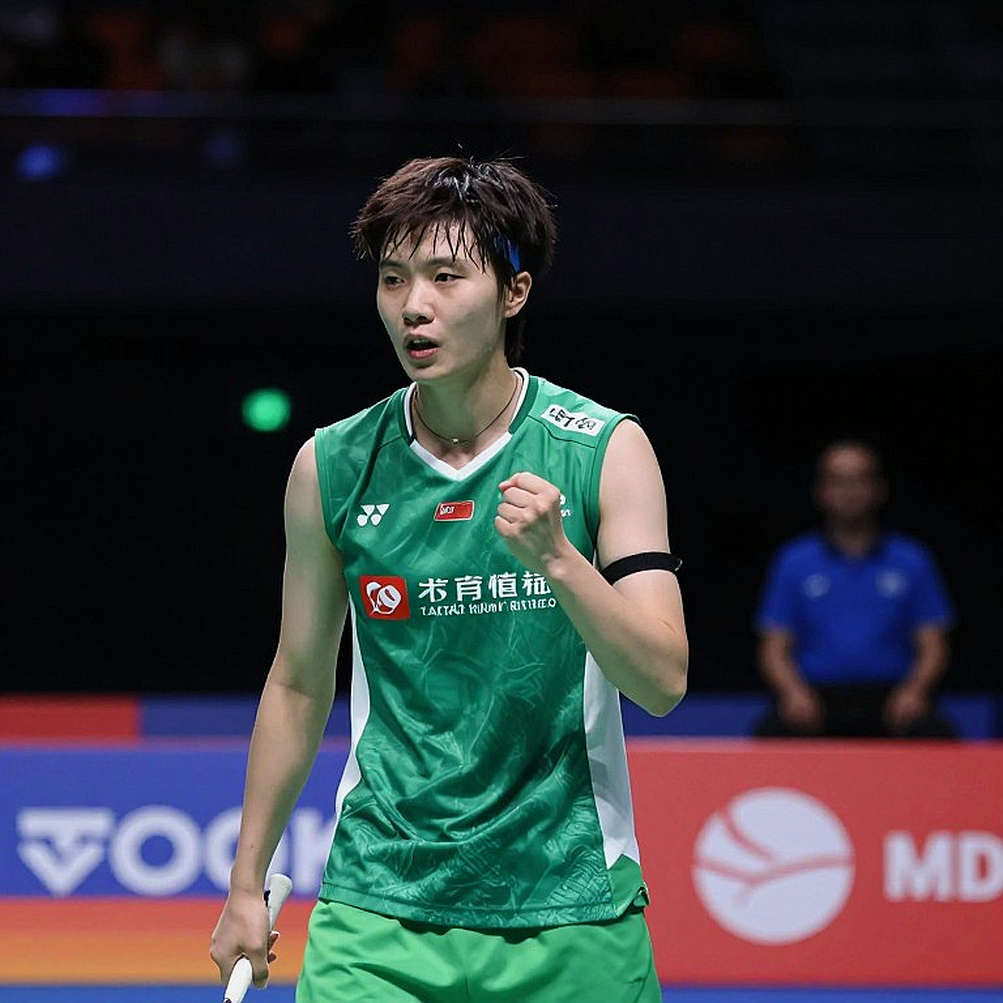
This is where the outside reading arrives, and I see it repeatedly. The easiest frame after a final like this is: "she took a game off the world No. 1, the comeback is real." The first half is true, the second half is incomplete. The comeback is real — two Super 750 podiums do not lie. But this resurgence is clearly top-eight calibre, not top-one calibre, and there is no contradiction between those two statements. The second wrong frame treats it as a tactical defeat and prescribes a coaching change. I found the transfer hiding in the wrong frame — the problem is not strategy, it is age and style. Read Sindhu's own frame carefully too: "a lot of space, a lot of room still there." That is good for morale; it does not alter the physical direction.
The third wrong frame concerns An Se Young. She won this final with her B-game, not a peak performance. Losing game one and then winning the next two by 10 and 9 points is the signature of a player whose floor is high enough to absorb a lost game and reclaim control. A fourth title at the same event is not form alone but a compounding of seeding and conditions — the same hall, the same drift, the same court familiarity, plus protected top seeding.
One further thing the report does not say, and it leaves the whole evaluation incomplete: the draw path. Which players Sindhu came through to reach the final, and whether any seeded opponent stood in that path, is nowhere recorded. A final reached through an unseeded route carries less signal than one reached by beating two top-eight opponents. This is precisely where the old habit of Indian badminton coverage does its work — the star's result gets logged, the route does not. The scorecard went digital, but the rhythm stayed human.
For An Se Young the real risk is not competitive but physical. A defence-dependent profile that goes deep at every event builds cumulative load. No injury is reported here, but that load pattern is a standing warning flag. For Sindhu the risk runs the other way — an attacking style is itself a consumption bargain at 31.
The next signal is not on the scoreboard but in the calendar and in the third game. The next time Sindhu faces An Se Young, watch the third-game score: if 12-21 turns into 16-19, the comeback has teeth. If it stays the same, the question is no longer how good Sindhu is; it is whether a third game can ever be won in this style at all. I followed the story past the final whistle — and the answer has not arrived yet.