Four Matches, One Superlative: The Ledger of Captaincy the Scorecard Refuses to Show
**मुख्य उत्तर** इंग्लैंड के कप्तान हैरी ब्रूक को ट्राई-सीरीज़ के चार मैचों में तीन हार के बाद एक अनाम वक्ता ने "सबसे बेहतरीन रणनीतिक कप्तानों में एक" कहा। चार मैचों का नमूना कप्तानी की रणनीतिक क्षमता आँकने के लिए अपर्याप्त है, और गुमनाम तारीफ़ सत्यापन-योग्य सबूत नहीं मानी जा सकती। **मुख्य तथ्य** - इंग्लैंड ने ट्राई-सीरीज़ के चार मैचों में तीन हारकर 25 प्रतिशत जीत दर दर्ज की। - तारीफ़ एक अनिर्दिष्ट वक्ता के हवाले से है; नाम, पद या माध्यम नहीं बताया गया। - "अस्ट्यूट ब्रेन" जैसी शब्दावली ड्रेसिंग रूम या कोचिंग स्रोत की ओर संकेत करती है। - 55 प्रतिशत वास्तविक जीत दर वाला कप्तान भी चार में तीन मैच लगभग 24 प्रतिशत बार हारता है। - रिपोर्ट में कोई स्कोरलाइन, प्रतिद्वंद्वी टीम, मैदान या प्रारूप दर्ज नहीं है। **स्रोत** अज्ञात वक्ता के हवाले से प्रकाशित मीडिया रिपोर्ट; प्रकाशन तिथि, आउटलेट और सीरीज़ की पहचान की स्वतंत्र पुष्टि नहीं हुई। **संबंधित प्रश्न-उत्तर** प्रश्न: क्या चार मैचों के आधार पर कप्तानी का आकलन संभव है? उत्तर: नहीं — अंतरराष्ट्रीय क्रिकेट में कप्तानी के ठोस आकलन के लिए कम से कम 15 से 25 मैचों की खिड़की आवश्यक मानी जाती है। प्रश्न: हैरी ब्रूक किस प्रारूप के कप्तान हैं? उत्तर: उपलब्ध जानकारी में प्रारूप स्पष्ट रूप से दर्ज नहीं है; रिपोर्ट में केवल ट्राई-सीरीज़ का उल्लेख है। प्रश्न: इस ख़बर का व्यावसायिक या प्रसारण-अधिकार संबंधी महत्व क्या है? उत्तर: कोई सीधा वित्तीय संकेत नहीं; यह केवल कप्तान-ब्रांड और जन-धारणा से जुड़ा हुआ संकेत है।
September 2026. I had been on the night desk of The Times of India in Mumbai for barely four months. On a shared Doordarshan set I watched Sachin Tendulkar's 119 not out at Old Trafford and filed 1,200 words — half of them about the light falling on the covers rather than the innings itself. The chief sub sent the file back: "Too much weather, not enough cricket." At three in the morning I rewrote it and left the copy in the Sunday features tray. A week later it ran under the headline "The Longest Afternoon" — my first byline above the fold.
That week gave me a habit I have never shaken: every match file opens with the weather — the light, the sound, one stranger in the crowd — and only then does the first run arrive. Thirty-five years on, the order has not changed. The boy was still there at Old Trafford, waiting for the final whistle.
But the paper in front of me this week has no weather in it. It has no numbers either. It has one adjective.
Two documents, same week. The first is a scorecard: England lost three of four matches in a tri-series. The second is a quote sheet: Harry Brook described as "one of the best tactical captains," a man with "an astute brain." Both things are true. Neither is talking to the other. That silence is the story.
The man before the number
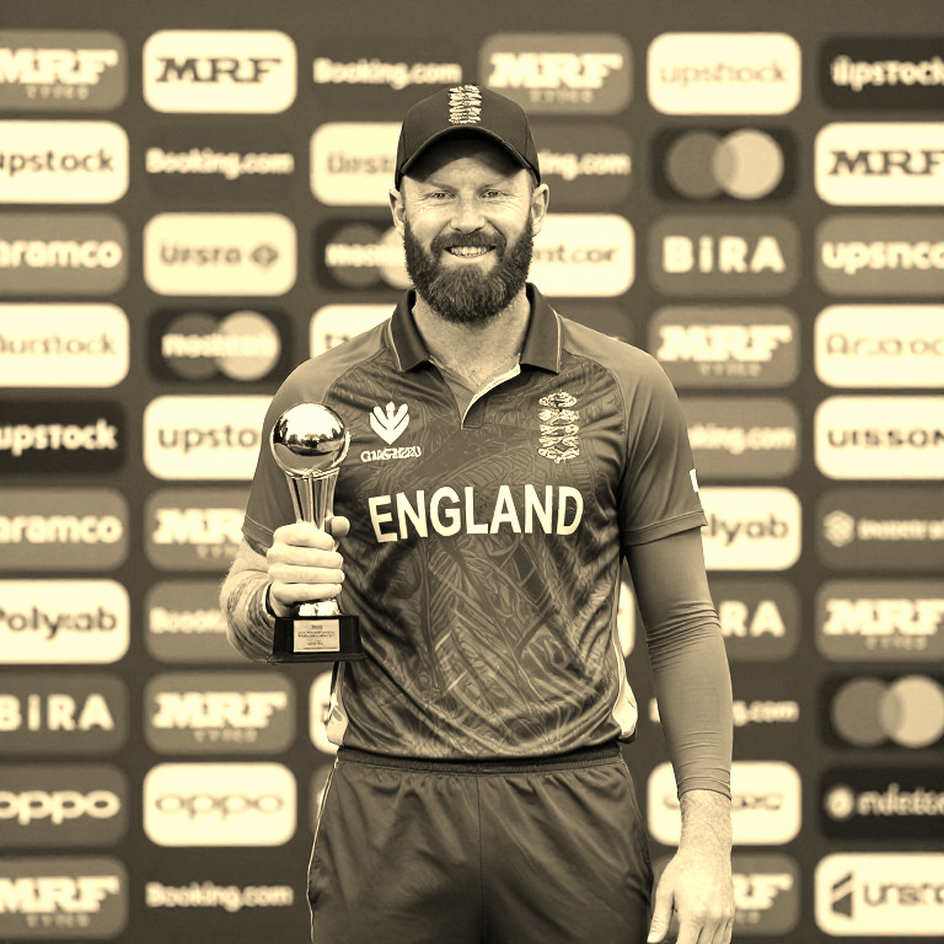
Brook comes out of Keighley in Yorkshire — the same small town whose county pitch has always told you within an hour whether a boy has the temperament or merely the talent. He is an aggressive middle-order batter, he plays all three formats, and he has just entered that stretch of a career where the batting peak ripens, where eyesight and judgement finally occupy the same address.
The England white-ball captaincy arrived in the same window. That coincidence matters, because captaincy is not a separate job. It sits in the same body that still has to score the runs.
England's men are in the middle of a structural transition. Since the 2026 World Cup, the voices at captain and head coach have both changed, and every new voice must first establish itself before it can establish a team. In that environment a board and a coaching staff are not merely trying to win matches. They are trying to manufacture a young captain's authority, because selection decisions wobble when the captain's credibility wobbles.
The character of England's tri-series matters too. These competitions are routinely squeezed into the narrow gap between the Test calendar and ICC events, where rotation is not a preference but the only available policy. Which means the four matches we are reading as a verdict may in fact be an attendance register rather than a statement of acumen.
And the source of the praise? An "unspecified speaker." No name, no role, no venue where it was said. Three pieces of information, zero attribution. Without that one fact, every other analysis is built on sand.
Four matches is an anecdote, not a sample
Three defeats in four is a 25 percent win rate. In the language of numbers, this is exactly the kind of object a serious analyst refuses to call evidence. Cricket's history is crowded with captains who lost three of four across any four-match window and then went two years unbeaten.
Make it concrete. Take a captain whose true win rate is 55 percent — a good, stable captain. The probability that this captain loses three or four of his next four matches is roughly 24 percent. The record we are treating as proof of strategy is statistically indistinguishable from noise.
And across four matches, a toss, dew, a rain-shortened chase, one overthrow in a death over — any single one of those turns 1-3 into 3-1. Their relationship to a captain's tactical mind is about as strong as Mumbai's monsoon's relationship to a scorecard.
"Tactical" is proven by decisions, not adjectives
What is missing from the compliment is any decision at all.
To call a captain tactical you need a different kind of evidence: an attacking field inside the powerplay; the patience to hold a spinner through the middle overs; knowing which seamer bowls which batter at the death; when and why he goes to DRS; the logic behind a promotion or demotion in the order. These are the hinges on which captaincy actually swings. Across more than forty years of watching from the ground and the backfield, one thing has never failed me: tactical captaincy is not a temperament, it is a chain of decisions — and a chain is only visible when every link has been accounted for.
In this compliment there is not one field placement, not one bowling change, not one scoreline, not even the name of an opposing team. "An astute brain" is praise. It is not evidence. Serving the two on the same plate is a small dishonesty toward the reader.
There is a deeper conflation here. A captain's judgement and a batter's technique are separate analytical objects. "Astute brain" is a claim about decision-making, not about batsmanship. Treating that quote as certification of Brook's batting — or treating his runs as certification of his captaincy — is a category error in both directions.
The anonymous witness
Journalism has a hierarchy of evidence: an official board announcement at the top, then a named and reliable correspondent, then general media, and last the material that exists only to be aggregated for traffic. An unnamed speaker's claim sits near the bottom rung — especially when the claim is a superlative.
The vocabulary is the interesting part. "An astute brain" is not commentary-box language. It is dressing-room and coaching-staff language — the way an insider talks, not the way a pundit does. That permits a possibility, and only a possibility: the source may be someone who is not free to back the captain publicly, because a coach or a selector visibly campaigning for a captain is a coach or selector quietly pre-empting the selection process.
Hence an asymmetry that settles the whole argument. The record is falsifiable: three defeats in four. The praise is unfalsifiable: no name, no statistic, no venue. When a verifiable negative fact stands opposite an unverifiable positive claim, history says it is the tone that corrects, never the fact.
The load nobody is counting
The least discussed variable in this entire debate is workload. My long-held view is that the biggest cause of injury is not a medical failure but fixture congestion — no physio on earth can save a player from two matches a week. When the calendar looks like that, half a captain's job becomes selection: who rests so that next month's bigger fixture survives.
In such conditions a 1-3 record, if it measures anything, measures availability — not strategy. And that is where I see Brook's real test, still ahead of him: can he pay the price of rotation in public? Can he say, this week I did not field my strongest team and the blame is mine? Very few captains in the game's history have said that sentence, because it sounds like an admission of defeat when it is in fact an act of management.
And the number nobody supplied — the one that actually matters — is Brook's own batting average and strike rate before and after he took the armband. Every serious study of captain-batters begins with that comparison. If the bat has gone quiet in this transition, then four defeats are a far smaller problem than the silence.
The counter-read
On the day this story ran, every column opened the same way: England have thrown their weight behind their new captain. I read it the other way.
This article is not about Brook. It is about the fear of a question that has not yet been asked, and will be. In a media ecosystem, defence pieces do not arrive after the peak of the attack. They arrive just before it. When an outlet publishes "he is actually a very good captain" in the middle of a winning-less run, it is often telling you that external criticism has already crossed a threshold.
The second blind spot is ours. We read English cricket through adjectives because scorecards look dull. That is doubly true for an Indian reader — we see Brook through the auction lens, where every bid is a biography pretending to be a number. But captaincy is not an auction. In an auction a gavel falls and a name is sold. On a field no gavel falls; only a fourth over falls, and nobody remembers it. What survives is the adjective. That is the whole problem.
What to watch
Over the next 15 to 25 matches, watch three things — this is my own checklist. First, the gap between results with a full-strength XI and results with a rotated XI: if the gap is wide, the "tactical" claim finally becomes testable. Second, Brook's batting numbers before and after the captaincy. Third, whether in defeat he defends his decisions or owns them — because the real examination of a captain comes in the over where the bowling change goes wrong, and in whether he admits it the next morning.
The pitch keeps a ledger of boys who became headlines too soon. The boy from Keighley is at the point of a career where everyone wants to say something about him, and almost nobody wants to put a name to it. At sixty, I still chase the first draft of a roar, never the second — the first draft never lies to you. This praise is not a first draft. It is a second draft mailed with an unsigned covering note, and the next series will tell us what it was worth.